In the presence of these witnesses
The guests are not there to watch.
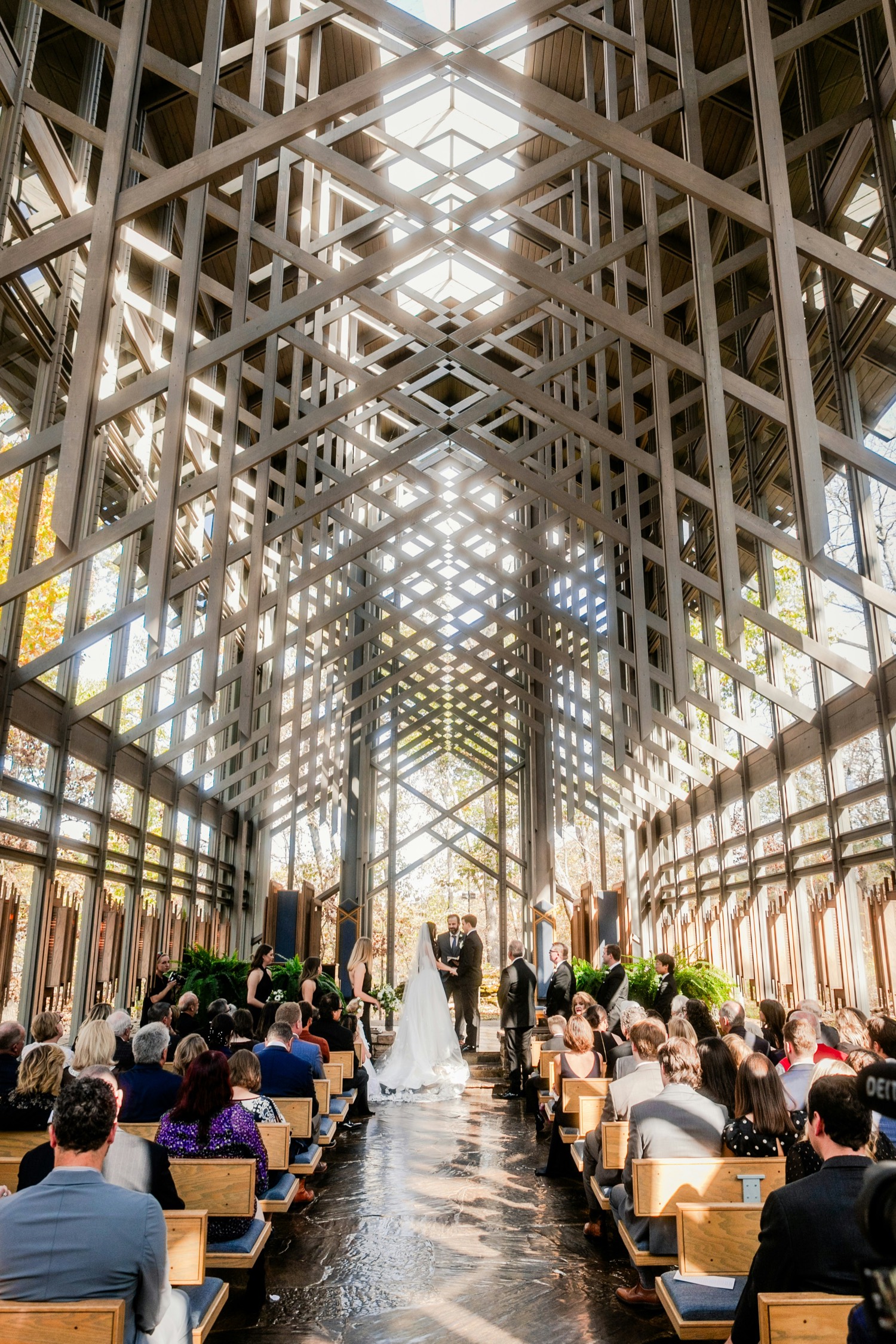
About halfway through the ceremony, the language turns around. The vows are addressed to one person, the readings to the couple. Then the officiant arrives at an old formula, in the presence of these witnesses, and for one sentence the whole thing faces the chairs. The rows respond before they have decided to. The college friends stop trading looks. A grandmother who has been fanning herself with the program goes still. Nobody planned to sit up straighter, but the rows do, slightly, together, the way a room does when it has just been told that the thing happening in front of it will not happen without them.
The old formula is not decoration. It names the guests' job. A performance needs an audience, and an audience receives an evening: the thing is finished, and they are what it is for. A marriage needs witnesses. Witnesses are part of the fact. The law, unsentimental about nearly everything, still requires two of them to sign, because a wedding is one of the few events left that does not fully exist until someone else has seen it. Guests feel some version of this without being told. They did not come to watch two people get married. They came to bear witness.
The difference shows the moment an evening asks its guests for the wrong one. The first dance stops halfway and begins again, cleaner this time, for people who are not in the room. The guests cheer on cue, both times. They are good sports about it, drinks held out of frame. But something in their posture goes off duty. They have been quietly recast, no longer witnesses, briefly crew, and the evening has stopped needing anything from them except cooperation. Hours later, in the car, it gets said the way these things get said: it was beautiful. I don't know. It didn't need us.
None of this is about photographs. A good photographer moves through a real moment collecting evidence of it: the moment was going to happen anyway, and the room can feel that it was. What tires guests is the moment built the other way around, the one that would not have happened without the lens. The difference is not whether a camera was present. It is which way the moment faced.
A witness has standing. The roommate who knew the bride at nineteen is not in the fourth row as decoration; she is corroboration, living proof that the person in the aisle has been this person all along. Guests cry at weddings out of proportion to how well they know the couple, and part of the reason is that for an hour their attention is not incidental. It is one of the materials the evening is made of. A room that needs its people produces a specific feeling in them, close to the one left by an evening addressed to someone in particular. Not merely welcomed. Required.
The couple collects the return for years, through an unglamorous channel: other people's accounts. The witnesses saw the day from a hundred angles the couple never occupied, and the reports start arriving in the hour after dinner, a guest catching the groom's elbow to tell him what the room looked like from the back during the vows. The film shows the couple what happened. The witnesses keep confirming that it happened, and that they were inside it when it did.
Late in the reception, the father of the bride misses his turn in the dance he practiced for, and the room laughs, and he laughs, and his daughter catches his hand and brings him back around. The second try lands inside the laugh, which is still going. At table nine, somebody starts the applause a beat early, before the song is even over. It spreads.