The Difference Between
Expensive and Elegant.
On restraint, and the quiet art of knowing what to leave out.
There is a kind of room that announces how much it cost. You feel it the moment you walk in — not as warmth but as pressure, a quiet insistence that you notice, that you appreciate, that you register the trouble taken. Everything in it is correct. Nothing in it is at rest. And there is another kind of room, often built the same week, sometimes from the same budget, that asks nothing of you at all. You walk in and your shoulders drop. You could not say why. You will spend the whole evening there without once thinking about the room, which is the highest thing a room can do, and you will leave having had the better time, and you will struggle, afterward, to explain what made the difference.
The difference is not money, though money is almost always blamed for it. The two rooms are frequently built on the same means and the opposite instinct. One adds. The other edits. One keeps asking what more it might include — what gesture, what flourish, what additional proof of care — and the other asks what it can leave out without the evening losing anything, and then has the nerve to actually leave it out. Addition is the easier instinct by a wide margin. It feels like generosity. It is usually fear.
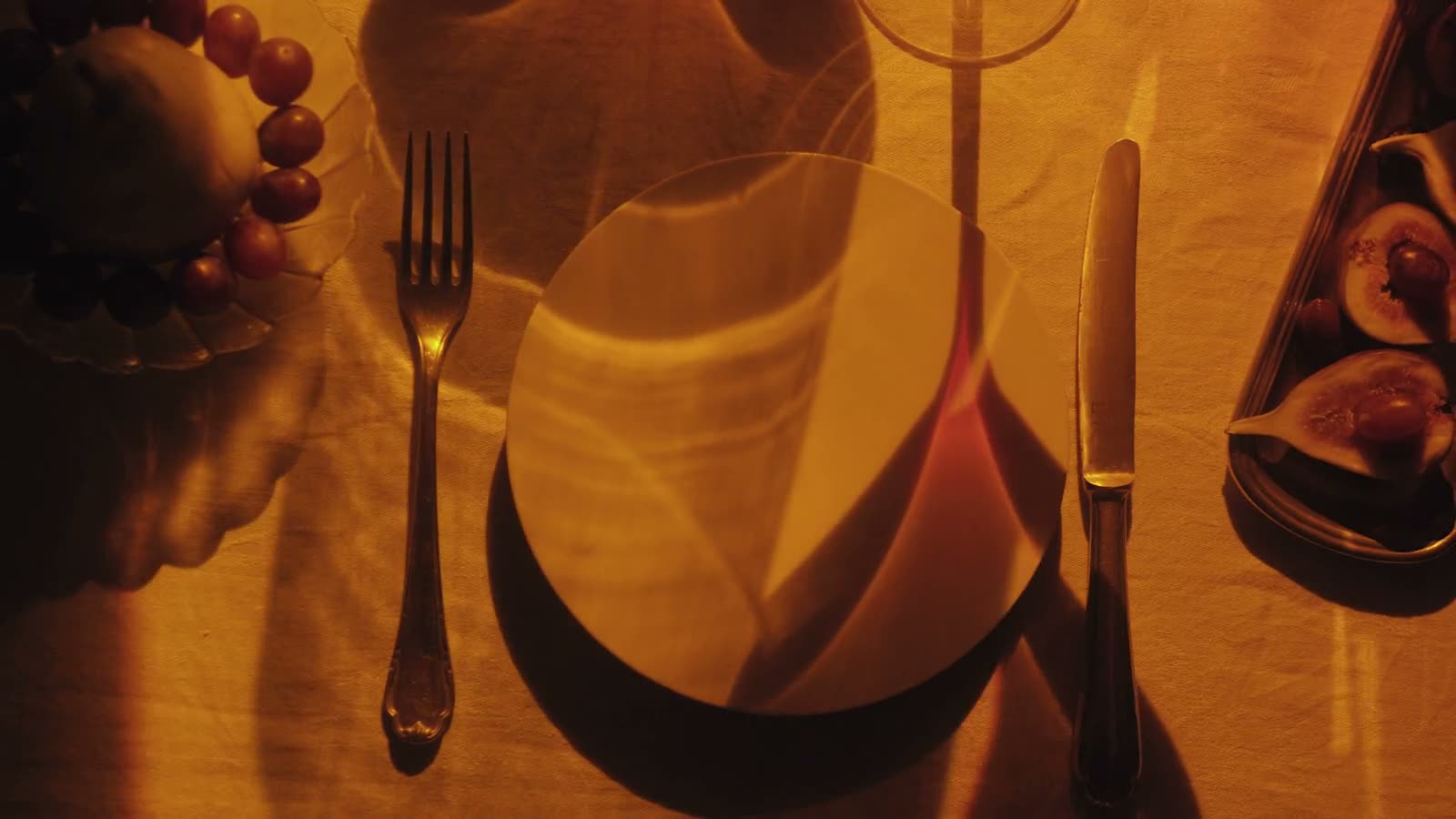
We mistake more for better because more is legible and restraint is not. A room that has had things removed does not advertise the removing. You cannot photograph an absence. The second arrangement that was considered and set aside leaves no trace, and so the discipline that produced the quiet, exhaling room reads, to a passing eye, as luck — or worse, as having simply done less. But the bare center of that table was not an economy. It was a decision, and a harder one than its opposite, because it had to be made against the entire momentum of an occasion, which always wants to grow. Every gathering tends toward accumulation the way a sentence tends toward qualification. Leaving the center empty is an act of will.
The gatherings we remember have a quality that is difficult to name and easy to feel: they seem inevitable. Not designed — inevitable, as though the evening could not have gone any other way, as though the long table and the low light and the particular order of things had always been waiting to happen and someone merely allowed them. This is the strange reward of restraint. The more visibly a thing has been arranged, the more it reminds you that it could have been arranged otherwise; and a room that keeps pointing at the choices behind it never quite lets you forget you are standing inside a production. The elegant gathering hides its arrangement. The seams are gone. What is left feels less like a design and more like a fact of the world — something discovered rather than assembled.
Restraint reads as confidence because it is confidence. It is the host's quiet certainty that the evening does not need rescuing. The additive room is an anxious room; you can feel the worry in it, the second and third provisions laid in against the chance that the first was not enough. The restrained room has decided that enough is a real place and that it is possible to stand in it. Guests register this the instant they arrive, though never in words. A room sure of itself gives permission. People settle in the presence of something that is not asking to be reassured. They lean back. They stay longer. They behave, all evening, the way the room behaves — as though there were nothing to prove.
What they are responding to is atmosphere, which is not the same as decoration and is often in quiet competition with it. Decoration is what a room contains. Atmosphere is what a room does — to the light, to the hour, to the distance between people. A single long table does more for an evening than any amount of styling laid across it, because the table decides who sits near whom, and nearness is the whole event. Most of what gets added to a gathering improves the decoration and quietly spends the atmosphere, and the trade is almost never named, because each addition, taken on its own, looks like care. It is only together, on the night, that they crowd the air out of the room.
Extravagance gives a guest more to look at. Generosity gives a guest more room to be.
To host well is to edit — to treat an evening the way a good editor treats a paragraph, cutting everything that is merely true to leave only what is necessary. The instinct runs against everything an occasion encourages. You can move through the whole planning of any gathering — a dinner, a holiday, a wedding — by saying yes, and every yes will feel like warmth, and the accumulated yeses will produce a room that is busy and tired and faintly desperate to please. The harder discipline is the no said in service of the night: the flower not bought, the course not added, the corner left plain so the eye has somewhere to rest. Subtraction does not announce itself as love. It is the deeper form of it.
And it is, in the end, the more generous instinct, though it can look austere from across the room. A space can be generous without being extravagant; the two have only been confused for so long that the confusion now passes for common sense. Extravagance gives a guest more to look at. Generosity gives a guest more room to be — to arrive, to settle, to be at ease, to forget themselves and turn toward the people they came to see. The most generous thing a gathering can offer is not abundance. It is the feeling that nothing further is asked of you, that you have only to be here, and that the evening has already quietly handled everything you might otherwise have had to manage.
This is true of a wedding, but it is not really about weddings. It is true of a dinner for six, of a house at the end of a long renovation, of a table laid for a holiday, of a year, of a life. The instinct that overfills a reception is the same one that overfills a home and a calendar — the belief that care is a thing you prove by addition, that to leave something out is to risk being thought not to have cared enough. But the rooms we return to in memory are almost never the full ones. They are the ones with air in them. They are the evenings that knew what they were and did not strain to be anything more, and so let us be there completely.
Expense you notice on the way in. The other thing you notice only later, and sideways, as the memory of having been, for a few hours, entirely at ease — unhurried, unwatched, sure of your welcome, in a room that had quietly decided you needed nothing more than what was already there. That is the difference, and it was never about how much was spent. It was about how much was understood.