What Candlelight Is Actually For
It was never for the photographs.
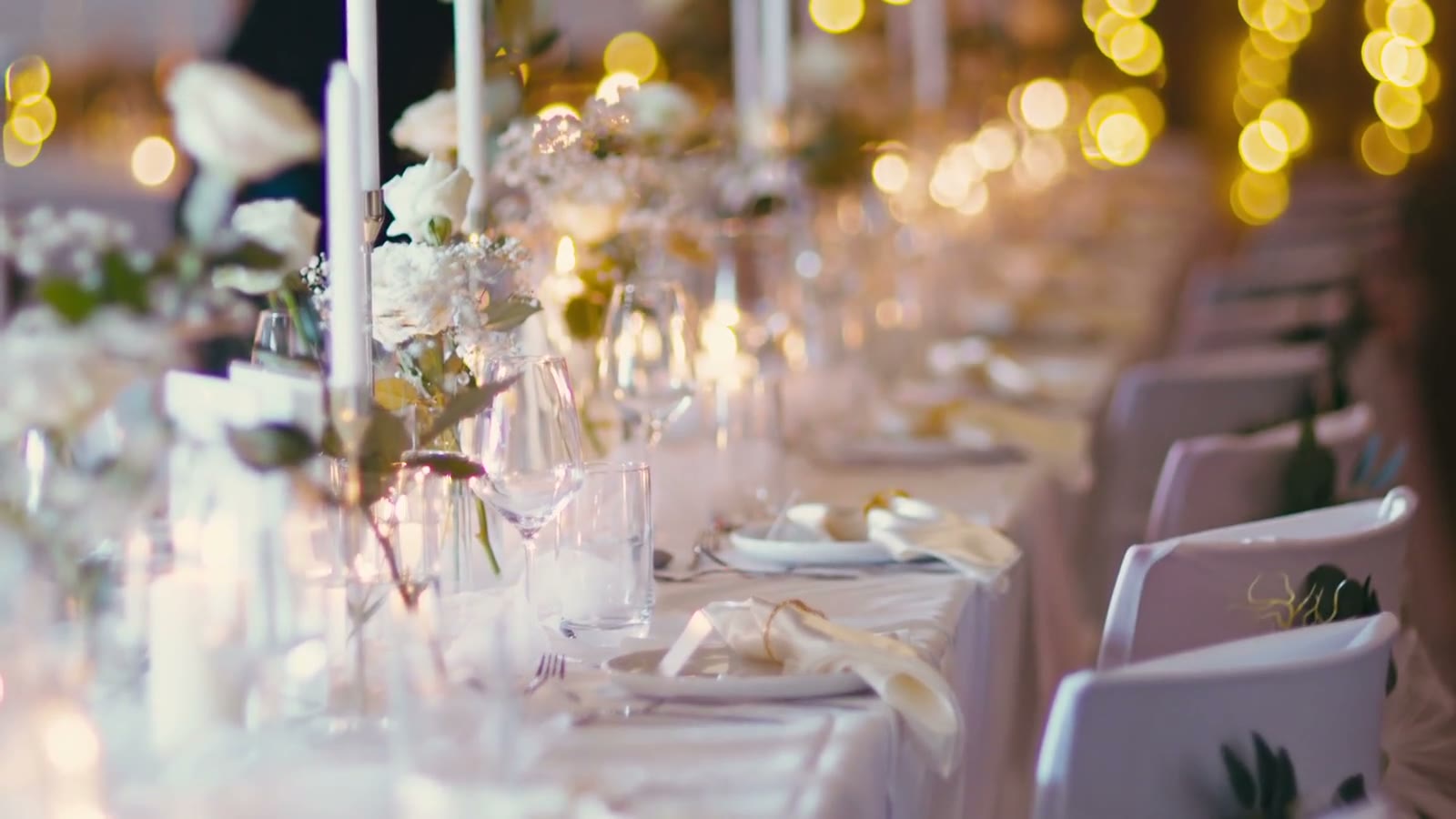
Someone always lights the candles either a little too early or a little too late, and either way there is a moment — usually unremarked, usually while the room is still half-empty and someone is still moving chairs — when the overhead lights go down and the candles take over, and the room quietly changes its mind about what kind of evening it intends to be. It is one of the few changes in a wedding day that you can feel happen. Most of the others you only see.
You will have watched what comes after it without filing it as anything that happened. The tables that were meant to clear for dancing somehow don't. A father who has been on his feet all evening — greeting, gesturing, standing at the edge of every photograph — finally sits down, and this time stays. Someone has slipped her shoes off under the table and shows no sign of looking for them. People who have been in motion all night settle into the low light and lean toward whoever is across from them, and the room, which an hour ago was a schedule, becomes a conversation. No one decided this. The candles did, and no one thinks to credit them.
We tend to file candlelight under decoration. It lives on the mood board between the linen and the glassware, tagged with the words we use for how it photographs: warm, romantic, intimate. All of which are true, and all of which describe the smallest part of what it is doing. The photograph is the byproduct. The work happens to the people in the room, and it happens whether or not a camera is present to take the credit.
The work is mechanical before it is anything else. Candlelight is low, it is moving, and it is warm in color, and those three plain facts do the whole job. Because it is low, it lights the table and the faces around it and lets the rest of the room fall away, drawing a quiet boundary around a group small enough to actually be in. Because it is moving, a face in candlelight is never quite fixed — it stays a little unresolved, a little alive, in a way no steady bulb allows. And because it is warm, it takes the blue cast that overhead light lays under the skin and simply removes it. It flatters, but it flatters by subtraction. It adds nothing. It takes away the things a bright room insists on showing.
What this does to a gathering is the part worth noticing. In a brightly lit room everyone can see everyone, which means everyone is, faintly, on display — appreciative, a little careful, aware of being seen. Candlelight lowers the resolution of the room. You can see the four or five people inside your pool of light and not much past it, and that smallness is the entire gift: it shrinks the social world to a size a person can be present in. People lean in. They talk to who is near. A crowd quietly becomes a series of small warm rooms with no walls between them.
And a candle keeps time in a way no one resents. It burns down across the exact span of an evening, and though you never watch it the way you watch a phone, some older part of you registers that the light is being spent — that this has an end, and is therefore worth staying inside of. A room lit by electricity could, in principle, go on forever, and a room that could go on forever is one no one is quite present in. The flame gives the evening an edge. An evening with an edge is one people sink into rather than merely attend.
This is why the candle cannot really be swapped for the dimmable bulb that imitates its color, or the battery flame that photographs almost the same. Those get the look and miss the spending. The real flame works because it is actually being consumed — a small, honest transaction taking place on the table, light traded for time in plain view, and people feel the honesty of it long before they could explain it. A flameless evening looks identical and lands hollow, and most people will never know why.
Candlelight is the rare thing in a room that does its entire job by receding. It is not an installation. You stop seeing it within minutes, the way you stop seeing a room that has been hosted well, and for the same reason: it is busy doing its work, not asking to be admired for it. It requests nothing of the guests and rearranges everything about how close together they sit. Almost nothing else added to a wedding can say that.
So what candlelight is actually for is not the look of the evening. It is the weather of it — the thing that settles, before a word has been spoken, how near to each other the people in the room are going to feel. A year on, no one will describe the lighting. What they will keep, without quite knowing that is what they are keeping, is how close the evening felt: who they leaned toward, how long they stayed, the table they were in no hurry to leave. That is what the light was for. It asks to be noticed by no one, and it decides almost everything.