Three people who knew them first
The only minutes of the evening when the room is told something it did not walk in knowing.
The maid of honor is four sentences in when she says the name of a street. Ellery. The apartment over the laundromat, the winter the radiator quit, the two of them asleep in their coats. At table eleven a woman who has worked beside the bride for six years hears that street named for the first time. Nothing about her would show up in a photograph. She sets down the bottle she had been about to pour from. She turns her chair a few degrees so she is facing the front properly. Two seats along, a man laughs half a beat after everybody else, at the place where the story explains itself, and then laughs again on his own, louder.
A wedding puts a hundred and forty people in one room, and every one of them is holding a different partial version of the same two lives. The school friends have the years before the job. The cousins have a child nobody else in the building ever met. The colleagues have the last six years and none of what came before them, and the parents have all of it except the parts that happened away from the house. Guests spend the whole evening reading two people from evidence, from the music and the food and the shape of the room, and they are good at it, and every bit of it is inference. Then somebody stands up with a folded paper and the inferring stops for four minutes. The toasts are the only part of the day when anyone in the room is simply told a thing.
It is also one of the few stretches of the evening when receiving becomes something the guests have to do together. The people at the tables have been hosted since they arrived, walked from room to room, poured for, pointed at things. Then a brother stands up and his voice goes at the third sentence, and a hundred and forty people who have done nothing all night but receive get very still and start working. Nobody touches a glass. Somebody near the back says take your time, and it carries, because the room is quiet enough now that an ordinary voice crosses it. The first available joke gets a laugh a size too big for it, which is the room letting him know whose side it is on. He finds his place on the page. Whether he was any good at this is not a thing anybody present could tell you afterward, because nobody in that room was listening to it as a performance.
What the toast leaves behind is not the toast. An hour later a man who arrived knowing four people is standing at the bar beside a stranger and says Ellery Street, and the stranger knows exactly what he means and has a view about the radiator. Before dinner, two guests who have never met have the drive, the weather, and how do you know them. Afterward they have three stories in common and a shared sense of who in this family is funny. It is a small change in the raw material of the evening and it runs through everything that comes next. The floor fills more easily. Tables mix that had no reason to. What a guest carries home is almost never a line from a speech; it is a conversation the speech made possible with somebody she would otherwise have nodded at across a room, and most of that happens later, in the hour when nothing is scheduled.
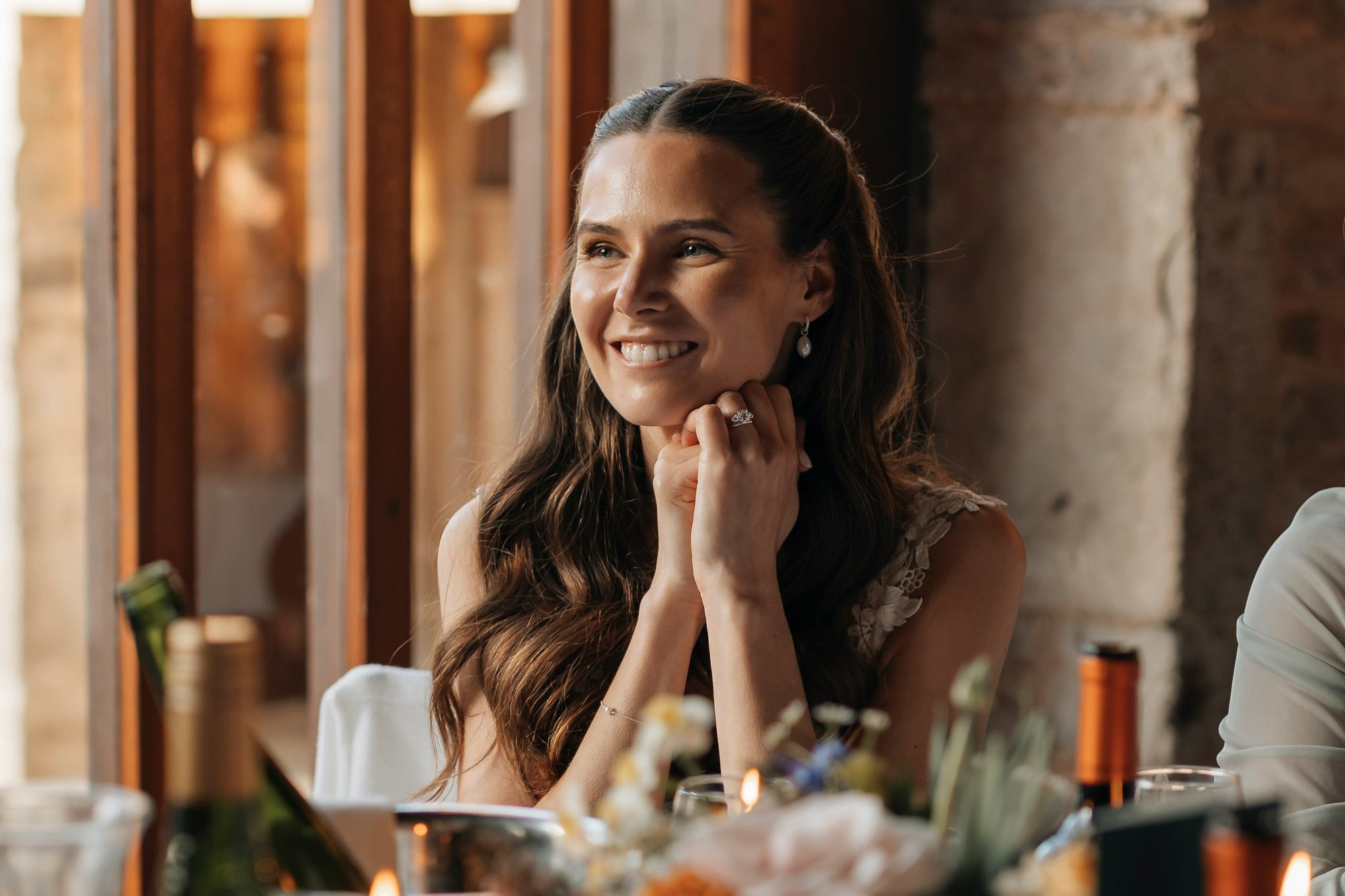
How much of this reaches anybody has a good deal to do with where everyone happens to be standing. Somebody speaking from the head of the room is in front of a hundred and forty faces with the couple somewhere behind him, so that most of the room spends the toast looking at the back of a jacket. A column takes out a quarter of the tables. Past a certain distance he is a figure in the middle distance, and what reaches the far end of the room is the words, which are the smaller half of it. The arrangement of the tables has already settled how near the couple sits to the person talking about them, and that distance is worth more than it looks, because the thing a room actually wants to watch during a toast is not the speaker. It is the bride hearing it.
The usual remedy is control. Fewer speakers. Shorter speeches. Drafts read in advance by somebody sensible. It works, in the sense that nothing goes wrong, and anyone who has sat through the eleventh minute of an uncle understands perfectly well where the instinct comes from. What it costs is specific, though. A vetted toast is a toast with the particulars taken out, and the particulars were the entire transaction. What is left is adjectives. Nobody at table eleven learns the name of a street from a list of somebody's good qualities, and a room kept safe from four awkward minutes goes home knowing precisely what it knew when it sat down.
Late on, past the part of the evening when anybody is watching anything, the woman from table eleven finds the maid of honor at the end of the bar and asks about the apartment. The maid of honor tells it properly this time, with the landlord in it, which was never going to fit. A man goes past carrying two drinks, hears the street, stops, and stands there holding both of them, because he lived a block over in those years and has been waiting all night for somewhere to put that. Across the room the bride has her back to all of it, being told something else about herself by somebody's uncle, her hand on his arm, not going anywhere.